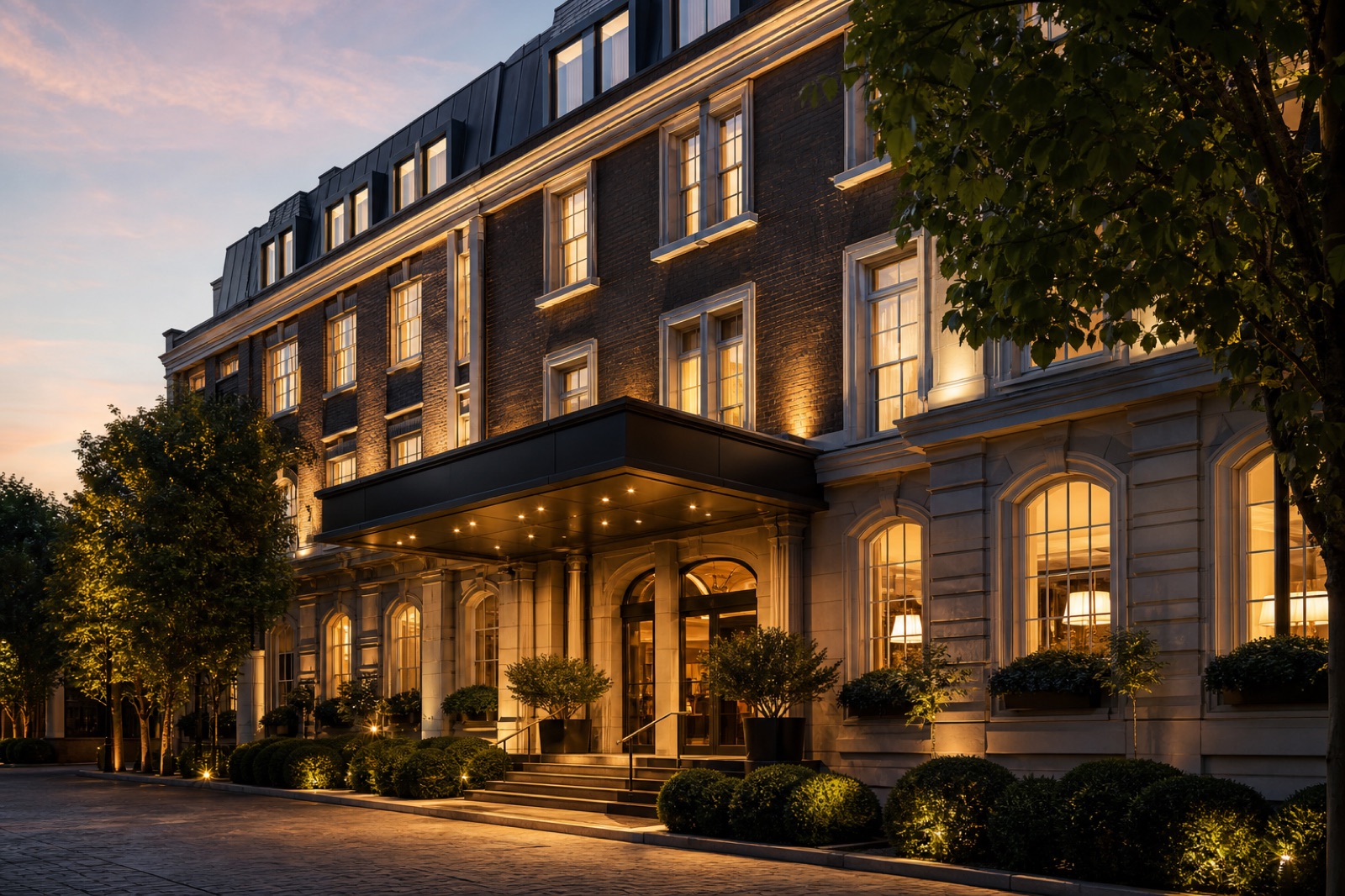
Hotel refurbishment and FF&E finance
Funding for a brand-standard refurbishment, a property improvement plan, FF&E and capital expenditure, structured as a short-term facility or an additional advance against the hotel.

What is hotel refurbishment and FF&E finance?
Hotel refurbishment finance funds the works that keep a hotel competitive: a room refresh, a brand-standard refurbishment, a property improvement plan, or the furniture, fixtures and equipment, the FF&E, that a hotel needs to replace on a cycle. It is finance to invest in a trading hotel, lifting its condition, its ADR and ultimately its RevPAR, rather than to buy or build one.
The works can be light or heavy. A light refurbishment, a soft refresh of rooms and public areas, is often funded by an additional advance on the existing facility or a short bridging loan, because the hotel keeps trading and the value uplift is modest. A heavy refurbishment, a full PIP imposed by a franchise, or a repositioning, is larger and may need a short-term facility sized against the value once the works complete, then a refinance onto a term loan as the improved trade beds in.
FF&E is a category of its own. Furniture, fixtures and equipment wear out and brand standards move on, so franchised and branded hotels face periodic FF&E spend that a lender treats as capital expenditure against the business. This can be funded by an additional advance, an asset finance line, or folded into a wider refurbishment facility, depending on the size and the hotel's headroom.
We place refurbishment and FF&E finance across the bridging and term lenders and challenger banks that lend on the sector, including Shawbrook, OakNorth and Assetz Capital, and we structure the facility around how the works affect trade and value, so the cost matches the return the refurbishment is meant to deliver.
The reason refurbishment finance is its own product, rather than just a use of a term loan, is that the works change both the cash flow and the value of the hotel while they are being done. Rooms taken out of service during a refurbishment do not earn, so revenue dips at the very moment capital is going out, and a lender has to be comfortable funding that gap as well as the works. On the other side, a well-judged refurbishment lifts the achievable ADR and the occupancy once the rooms reopen, raising RevPAR and the going-concern value, so the right facility is one that bridges the trading dip and is repaid out of the improved trade it creates.
Brand and franchise standards drive much of this spend. Operators of branded hotels sign up to a property improvement plan, a PIP, that the franchisor reviews on a cycle, and the brands behind the largest UK estates, Premier Inn at around 850 hotels, Travelodge at around 590, IHG at around 199 UK locations and Marriott at around 135, all set room and public-area standards that a franchisee must keep to. A PIP is therefore not optional: it is a condition of keeping the flag, and the finance has to be in place to deliver it on the franchisor's timetable, which is why we treat a PIP as a committed, deadline-driven spend rather than a discretionary upgrade.
- Funds room refresh, brand-standard refurbishment, PIP and FF&E
- Light works via an additional advance or short bridging loan
- Heavy works via a short-term facility sized on post-works value
- FF&E treated as capital expenditure against the business
- Aims to lift condition, ADR and RevPAR
- Placed with Shawbrook, OakNorth and Assetz Capital
Indicative terms
- Loan sizeFrom around 100,000 pounds upward, depending on the works
- Loan to valueLight works to current value LTV; heavy works against post-works value
- TermMonths for a bridge; folded into a term loan for larger works
- RateIndicatively around 0.75 to 1.30 percent a month on a bridge, or term-loan rates on an advance
- StructureAdditional advance, short-term facility, or asset finance for FF&E
- DrawdownLump sum or staged against the works
- ExitRefinance onto a term loan as improved trade beds in
- SecurityFirst or further charge over the hotel
Indicative only. Terms vary by lender, scheme and borrower and are not an offer of finance.
Who it suits
- Operators carrying out a brand-standard refurbishment or franchise PIP
- Owners refreshing rooms and public areas to lift ADR and RevPAR
- Hotels replacing FF&E on a capital expenditure cycle
- Buyers funding a refurbishment alongside an acquisition
- Operators repositioning a tired hotel to a higher market segment
Discuss hotel refurbishment & ff&e finance
A view on fundability within one working day.
How refurbishment and FF&E finance works
Scope and impact
We scope the works and how they affect trade and value, then decide whether an additional advance, a bridging loan or a term facility fits best.
Terms and valuation
We secure terms from the lenders that fit and, on heavy works, instruct a valuation reporting on both current and post-works value.
Drawdown for the works
Funds are released as a lump sum or in stages against the refurbishment, keeping the hotel trading where possible during the programme.
Exit onto a term loan
Once the works complete and the improved trade beds in, a short-term facility is refinanced onto a long-term term loan at a lower rate.
Who can borrow and what lenders look for
What a lender looks for depends on the size of the works. For a light refurbishment funded by an additional advance, they care that the existing facility has headroom and the hotel's trade covers the slightly larger debt. For a heavy refurbishment or a PIP, they underwrite the works themselves: a costed scope, a credible contractor, a sensible programme, and the value and trade uplift the refurbishment is meant to deliver. They want to understand how the hotel keeps trading during the works, or how the closure period is funded if it cannot. A franchise-imposed PIP carries weight because it comes with a brand standard and a recognised covenant, but it also commits the operator to a defined spend on a deadline. They will also look at the borrower's track record of delivering works on budget, because a refurbishment that overruns ties up the rooms longer, deepens the trading dip and erodes the very return that justified the spend. On a heavy programme that closes part or all of the hotel, the lender treats the project much like a small development: staged drawdowns against certification, a contingency for the unexpected, and a clear plan for the trade recovery once the rooms reopen. We structure the facility around the works and the cash flow, sequence the rooms so the hotel keeps earning where it can, and evidence the return so the lender sees refurbishment as investment rather than cost. Where the works are tied to a franchise PIP, we present the franchisor's requirement and timetable, because a lender understands that a PIP protects the brand covenant that underpins the hotel's trade.
How much you can borrow
On light works funded by an additional advance, the amount is governed by the headroom in the existing loan to value and the hotel's ability to service the larger debt. On heavy works funded by a short-term facility, lenders size against the value once the works are complete, advancing a share of that improved value and releasing the funds in stages, much like a small development facility. FF&E can be funded as part of that facility, on an asset finance line secured on the equipment, or as a further advance, with the amount tied to the cost and the hotel's headroom. Because refurbishment lifts ADR and RevPAR, the works can increase the hotel's going-concern value and therefore its borrowing capacity once they bed in, which is what makes a refinance onto a term loan after the works the natural exit. The size of the facility therefore depends not just on the cost of the works but on the uplift they create: a refurbishment that moves a hotel from a tired three-star offer to a fresh, higher-rate product can lift the achievable ADR materially, and that flows through occupancy into RevPAR and into the going-concern value the eventual term loan is sized against. We work back from that improved value to set the right facility size, fund the trading dip while the rooms are out of service, and size the exit term loan on the post-works EBITDARM. We model the works, the trading gap, the post-works value and the eventual term loan together, so the refurbishment pays for itself in the structure rather than simply adding debt.
Rates and costs
Cost follows structure. An additional advance on the existing hotel facility is priced at term-loan rates, indicatively from around 7 to 10 percent, the cheapest way to fund light hotel refurbishment works where there is headroom. A short-term refurbishment bridge, a bridging loan taken specifically to fund the works, is priced per month, indicatively around 0.75 to 1.30 percent, because it is fast and temporary, and is meant to be refinanced once the works complete. FF&E asset finance carries its own rate over the life of the equipment. Expect a lender arrangement fee of around 1 to 2 percent, a valuation where heavy works are involved, legal fees, and on a bridge any exit fee. The total cost depends heavily on how long the works and the trade recovery take, so a tight programme and an early refinance keep it down. The structure decision is really a cost decision: where the existing facility has headroom, an additional advance at term-loan rates is far cheaper than a bridge, but where there is no headroom, or the hotel needs to come off its current lender, a short bridge at a monthly rate may be the only way to fund the works quickly, accepted on the basis that it is refinanced as soon as the improved trade beds in. FF&E spread over an asset finance line keeps the equipment cost off the property facility and matches the repayment to the useful life of the furniture and fittings. We disclose our broker fee in writing, compare structures on total cost over the life of the works and the recovery, and never claim an exclusive tie to any lender.
Refurbishment finance, bridging or development finance
Hotel refurbishment finance is the right product when an existing, trading hotel needs investment to stay competitive or meet a brand standard, short of building or extending the hotel. Light works lean toward an additional advance on the hotel term loan or a short bridging loan; heavy works sit closer to a small development facility, sized on the hotel's post-works value and refinanced afterwards. If the project is large enough to be a genuine build, extension or change of use, hotel development and conversion finance is the better structure. If you need to buy a hotel quickly before refurbishing it, bridging funds the purchase and the works can follow, and the refurbishment facility and the eventual term loan can be planned alongside the bridge so the whole sequence is mapped from the start. The dividing lines are not always sharp: a heavy refurbishment with significant structural work shades into development territory, while a light refresh funded on existing headroom barely needs a separate facility at all. What matters is matching the cost and the term of the money to the works it funds, so a quick refresh is not carrying long-term debt and a major reconfiguration is not stretched over a term advance it was never sized for. We match the structure to the scale of the works, so you are not paying development rates for a refresh, nor stretching a term advance over a job it cannot cover.
Hotel refurbishment & FF&E finance: common questions
How do I finance a hotel refurbishment?
Light works are usually funded by an additional advance on the existing term loan or a short bridging loan, while a heavy refurbishment or a brand PIP is funded by a short-term facility sized on the value once the works complete, then refinanced onto a term loan. We match the structure to the scale of the works and the hotel's headroom.
What is FF&E finance for a hotel?
FF&E finance funds the furniture, fixtures and equipment a hotel must replace on a cycle, treated as capital expenditure against the business. It can be funded by an additional advance, an asset finance line secured on the equipment, or folded into a wider refurbishment facility, depending on the size and the hotel's headroom.
Is there hotel refurbishment finance with no credit check?
No responsible lender advances against a hotel with no underwriting at all; refurbishment finance is commercial lending and the lender will assess the hotel, the works and the borrower. What we can do is place the case with lenders comfortable with the circumstances, including those that weigh the asset and the post-works value more heavily than credit history.
Can a refurbishment increase how much I can borrow?
Yes. A well-judged refurbishment lifts the hotel's condition, ADR and RevPAR, which raises its going-concern value and therefore its borrowing capacity once the improved trade beds in. That uplift is what makes a refinance onto a larger or cheaper term loan after the works a natural exit.
How long does refurbishment finance run?
An additional advance simply extends the term loan. A short-term refurbishment bridge runs for the months the works and trade recovery take, then refinances onto a term loan. The total cost depends mostly on that duration, so a tight programme and an early refinance keep it down.
Discuss hotel refurbishment & ff&e finance
Send us your scheme and we will come back with a view on fundability and likely terms within one working day.