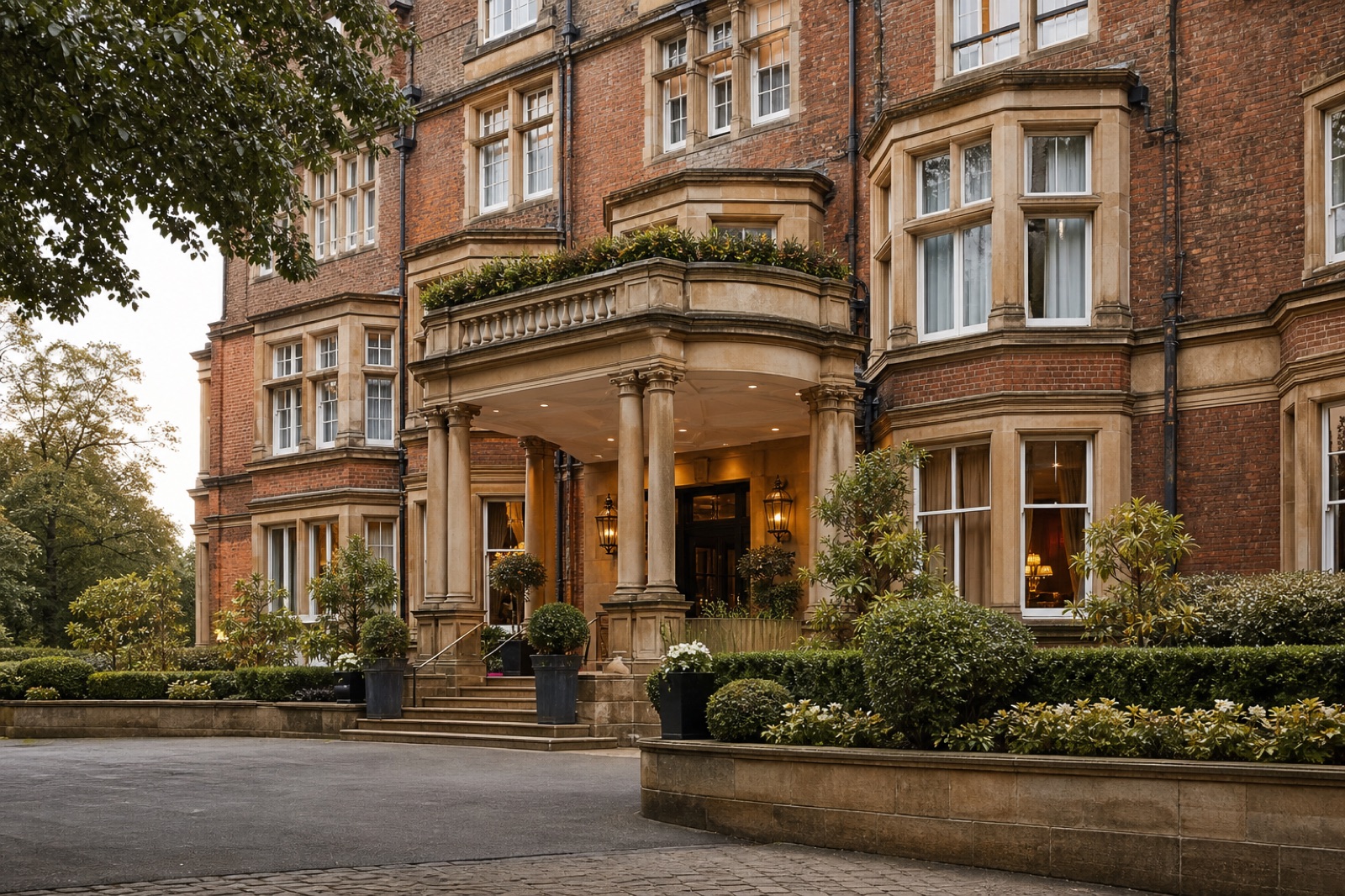
Independent full-service hotel finance
We arrange commercial finance for operators, buyers, investors and developers acquiring, refinancing, refurbishing or developing independent full-service hotels. This is business lending against a trading hotel, not a personal mortgage.
Funding independent hotel
An independent full-service hotel runs without a brand flag, offering rooms alongside food, beverage, events and often leisure, on the strength of its own reputation and the operator behind it. It keeps the freedom and the full margin that a franchise fee would otherwise take, but it carries the distribution and demand risk that a brand would otherwise share. For a lender, the operator is the covenant.
When we say independent hotel finance we mean the commercial mortgage, term loan, acquisition facility, bridging line, refurbishment line, development finance or refinance used to fund the hotel as a trading business across its life cycle. The credit case rests on going-concern EBITDARM, occupancy, ADR and trading performance, the freehold or leasehold tenure, and above all the strength and track record of the operator.
Without a brand to underwrite demand, lenders look harder at the trade record, the management team and the deposit or equity going in. A profitable independent with a proven operator and a clear local market position is readily fundable; a thin trade record or a stretched stack pushes a lender toward more equity and a finer structure, sometimes with mezzanine to complete the capital stack.
We present the trade, the tenure and the operator so hospitality-experienced lenders can price the risk, structure the equity and mezzanine where the stack needs it, and run the whole market as an arranger rather than relying on a single relationship.
What we fund
- Independent full-service city and town hotels
- Country-house and destination independent hotels
- Freehold and leasehold independent hotels
- Independent hotels with significant food, beverage and events trade
- Acquisition and refinance of profitable independents
- Refurbishment and repositioning of independent stock
Indicative terms
- Acquisition or term LTVUp to around 65 to 70% of value
- Going-concern basisSized on maintainable EBITDARM
- Bridging rateAround 0.75 to 1.30% per month
- Development or refurbishmentAround 60 to 65% of cost
- Term15 to 25 years, from around 7 to 10% per annum
- Capital stackSenior debt with operator equity and mezzanine
- Key testsOperator track record, EBITDARM, tenure, deposit
Indicative only. Terms vary by lender, operator and home and are not an offer of finance.
How we fund independent full-service hotels
We fund independent hotels on their going-concern trade and the strength of the operator behind them. For an acquisition or term refinance we model the maintainable EBITDARM, weigh the freehold or leasehold tenure and the management track record, and arrange a commercial mortgage or term loan to around 65 to 70% of value over 15 to 25 years at an indicative 7 to 10% per annum. Without a brand to underwrite demand, lenders look harder at the trade record and the equity going in, so we size the deposit realistically and, where the stack needs it, layer in mezzanine alongside operator equity. For repositioning we use bridging at an indicative 0.75 to 1.30% per month, or refurbishment and development finance to around 60 to 65% of cost, with a pre-agreed term exit once the hotel trades to plan. Every figure is indicative and never an offer; the terms depend on the accounts, tenure and operator.
Lender appetite for independent full-service hotels
Independent full-service hotels draw genuine appetite where the operator and the trade stack up. Specialist hospitality lenders and challenger banks fund acquisitions and refinance on going-concern EBITDARM, valuing a proven operator and a clear local market position, while bridging and development funders back repositioning and refurbishment, and high-street banks lend on stabilised, profitable independents. Because there is no brand to share the demand risk, lenders weigh the management team, the trade record and the equity more heavily than on a branded asset, and they may require more equity or a finer structure where the trade record is thin. As an arranger and introducer with no exclusive tie, we match the operator and the asset to the lenders most comfortable with unbranded trade, and we arrange mezzanine and equity to complete the stack where senior debt stops short.
The independent hotel market and exit
Independent full-service hotels sit in a deep and liquid market. UK hotel investment reached £3.01bn year to date in 2025 per Savills, after a record £6.6bn in 2024 per Christie & Co, with regional price per room at around £129,000 and London at around £315,000 per Knight Frank, and a UK average of around £142,000 per Cushman and Wakefield in H1 2025. Knight Frank and HotStats put regional RevPAR at around £98 on 82.8% occupancy and London at around £233 on 87.5% occupancy in Q3 2025, demand an independent captures on its own reputation. A profitable independent with a proven operator is a liquid asset with a clear sale or refinance exit; the value sits in the trade and the operator, so a buyer is acquiring a going concern, which lenders factor into both the entry and the exit. We structure with that in view.
Finance that suits this setting
- Hotel acquisition financeThe core route for buying a trading independent hotel on its going-concern trade.
- Hotel refinanceRe-prices debt or releases equity once an independent hotel trades steadily.
- Hotel refurbishment financeFunds rooms and amenity works that reposition an independent hotel.
- Hotel development financeFunds development and substantial conversion of independent hotel stock.
- Sale and leaseback and mezzanineFrees property capital or tops up the stack where senior debt stops short.
Fund a independent hotel home
A view on fundability within one working day.
What drives an independent hotel's numbers
An independent full-service hotel keeps the full margin a franchise fee would take, but it carries the demand risk a brand would otherwise share, so its economics rest squarely on the operator and the trade record. Knight Frank and HotStats put regional RevPAR at around £98 on 82.8% occupancy and London at around £233 on 87.5% occupancy in Q3 2025, demand an independent must capture on its own reputation and distribution rather than a brand's booking channels. The decisive factors are the going-concern EBITDARM across rooms, food, beverage and events, the freehold or leasehold tenure, and the strength of the management team. A profitable independent with a proven operator and a clear local position carries a sound earnings story; a thin trade record or a stretched stack pushes a lender toward more equity. We model the maintainable EBITDARM and weigh the operator, because there is no brand to underwrite the demand.
Indicative independent hotel leverage and rates
Indicatively we arrange independent acquisition or term lending to around 65 to 70% of value, over 15 to 25 years, at around 7 to 10% per annum, sized on the going-concern EBITDARM. A proven operator, a profitable trade record and freehold tenure earn the keener end; a thin record or leasehold tenure pulls leverage back and may call for more equity or mezzanine, which we arrange alongside the senior facility. For repositioning we use bridging at an indicative 0.75 to 1.30% per month, or refurbishment and development finance to around 60 to 65% of cost, with a pre-agreed term exit. Sale and leaseback can free property capital where the trade supports the rent. These are market-typical, indicative figures and never an offer; the terms depend on the accounts, the tenure and the operator, and we run the market to find them.
Frequently asked questions
What does an independent hotel mean for finance?
An independent hotel runs without a brand flag, trading on its own reputation and the operator behind it. For finance, that means there is no brand covenant to underwrite demand, so the credit case leans more heavily on the going-concern EBITDARM, the management track record and the equity going in than it would on a branded asset of the same size.
How do I get financing for an independent hotel?
We model the maintainable EBITDARM, weigh the freehold or leasehold tenure and the operator's track record, and arrange a commercial mortgage or term loan to around 65 to 70% of value over 15 to 25 years at an indicative 7 to 10% per annum. Where the stack needs it we layer in mezzanine and operator equity. We run the whole market and present every figure as indicative, not an offer.
Is an independent hotel harder to finance than a branded one?
It can be. Without a brand to share the demand risk, lenders look harder at the operator, the trade record and the equity, and may require more equity or a finer structure where the trade record is thin. The flip side is that an independent keeps the full margin a franchise fee would take, so a profitable, well-run independent remains readily fundable.
Does it matter whether the hotel is freehold or leasehold?
Yes. Freehold gives the lender bricks-and-mortar security alongside the trade, which usually supports keener terms, while leasehold is funded on the strength of the lease and the going-concern trade, with the lease length and terms central to appetite. We present the tenure clearly so lenders can price it.
Can I raise equity or mezzanine on an independent hotel?
Yes. Where senior debt stops short of the capital need, we arrange mezzanine and operator equity alongside the senior facility, and a refinance can release equity once the hotel trades steadily. Sale and leaseback can also free capital from the property where that suits the ownership and the trade supports the rent.
Funding a independent hotel home?
Tell us about the home and the operator and we will come back with a view on fundability and likely terms.