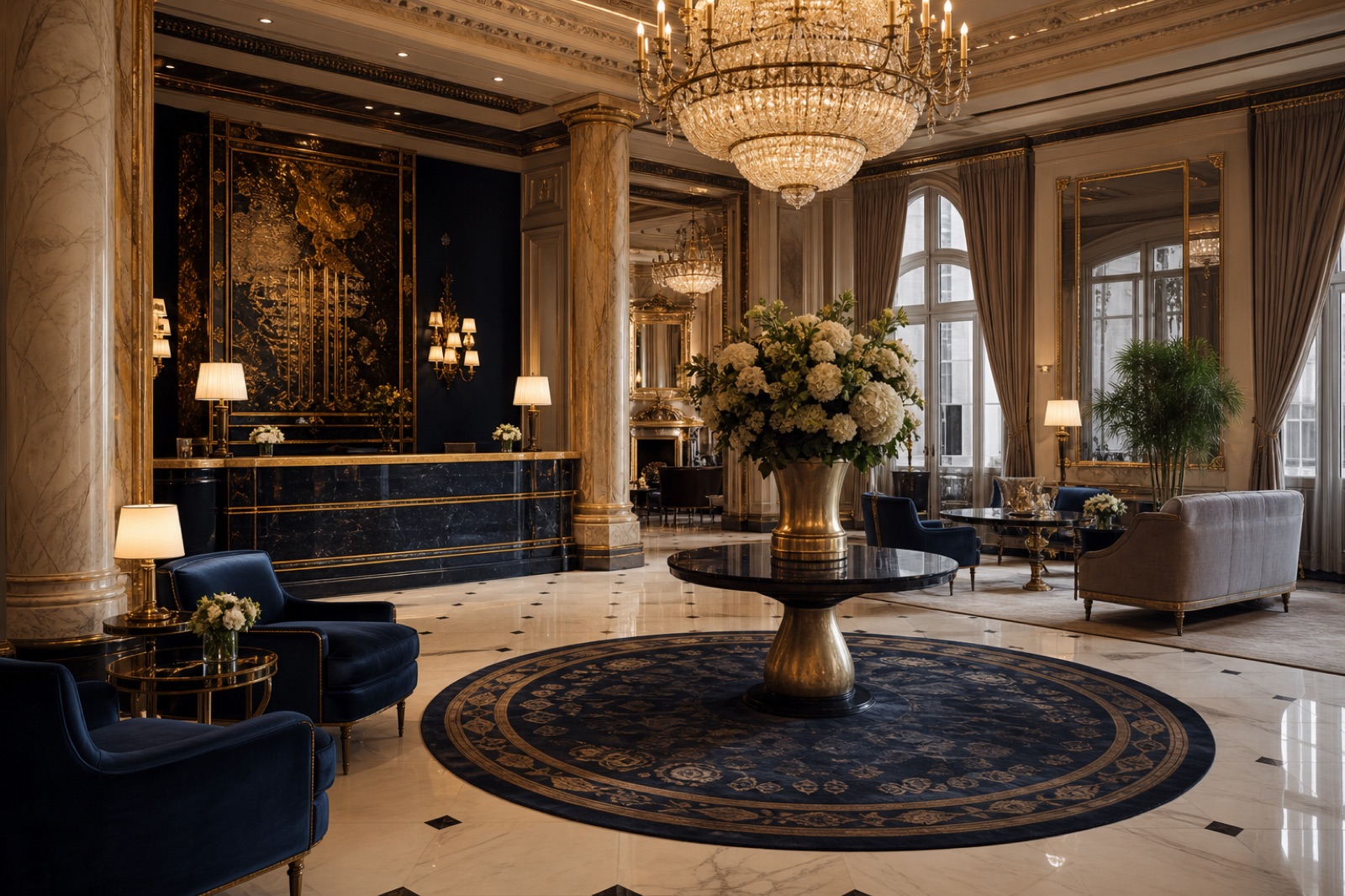
Luxury hotel finance for high-ADR assets
We arrange commercial finance for operators, buyers, investors and developers acquiring, refinancing or building luxury hotels. This is business lending against a trading hotel, not a personal mortgage.
Funding luxury hotel
Luxury hotels are full-service four and five star assets with a high average daily rate, deep amenity, and substantial food, beverage, spa and event income alongside rooms. They command the strongest rates in the market, but they carry high operating leverage: a large fixed cost base means that occupancy and rate swings move the margin sharply. Lenders fund the trade, but underwrite the volatility with care.
When we say luxury hotel finance we mean the acquisition loan, term facility, development finance, refurbishment line or refinance used to fund the hotel as a trading business. The credit decision rests on going-concern EBITDARM, occupancy, ADR and trading performance, the operator or brand behind the asset, and the durability of the wider demand picture, not on personal income.
Because luxury assets are large, capital-intensive and operationally complex, the capital stack often needs more than senior debt alone. We frequently layer operator equity and mezzanine alongside a senior term loan or development facility, and structure the funding around ownership that can be intricate, with operating, franchise, lease or management agreements separating bricks from trade.
We present the trade, the operating structure and the numbers so hospitality-experienced lenders can price the risk, and we run the whole market, including specialist and private lenders, as an arranger rather than relying on a single relationship.
What we fund
- Four and five star full-service luxury hotels
- Branded luxury hotels under management or franchise agreements
- Independent luxury and country-house hotels
- Luxury hotels with spa, golf, fine dining and event facilities
- Major refurbishment and repositioning of luxury stock
- Ground-up development of new luxury hotels
Indicative terms
- Acquisition or term LTVUp to around 65 to 70% of value
- Going-concern basisSized on maintainable EBITDARM
- DevelopmentAround 60 to 65% of cost, around 9 to 12% per annum
- RefurbishmentCapital line for rooms, spa and amenity works
- Term15 to 25 years, from around 7 to 10% per annum
- Capital stackSenior debt with operator equity and mezzanine
- Key testsADR, occupancy, trading performance, operator, demand
Indicative only. Terms vary by lender, operator and home and are not an offer of finance.
How luxury hotel financing works
We fund luxury hotels on their going-concern trade, with extra weight on operating leverage. For an acquisition or term refinance we model the maintainable EBITDARM, stress it for the swing in margin that a high fixed cost base creates, and arrange a commercial mortgage or term loan to around 65 to 70% of value over 15 to 25 years at an indicative 7 to 10% per annum. Because luxury assets are large and capital-intensive, the senior facility often sits beneath mezzanine and operator equity in the stack, which we arrange alongside it. For major refurbishment we provide a capital line for rooms, spa and amenity works, and for ground-up schemes we arrange development finance to around 60 to 65% of cost at an indicative 9 to 12% per annum, with a stabilised term exit. Ownership and operating structures, whether owner-run, franchised, leased or under management, shape the lending, so we present them clearly. Every figure is indicative and never an offer.
Lender appetite and the luxury hotel finance specialists
Luxury hotels attract committed but selective appetite because the operating leverage is high and the lot sizes are large. Specialist hospitality lenders and challenger banks fund stabilised luxury assets on going-concern EBITDARM, development funders back ground-up and major refurbishment schemes, and private and bespoke lenders fund complex or international ownership structures and larger luxury lot sizes that sit beyond mainstream bank appetite. Mezzanine and equity providers complete the stack where senior debt stops short. As an arranger and introducer with no exclusive tie, we match the asset, the operating structure and the lot size to the lenders genuinely comfortable with luxury trade and volatility, rather than defaulting to one name, and we assemble the senior, mezzanine and equity layers into a coherent stack.
The luxury hotel market and exit
Luxury trades on the strongest rates in the market. Knight Frank and HotStats put London ADR at around £266 in Q3 2025 on 87.5% occupancy, with London RevPAR at around £233, the prime end of which is where luxury assets sit, while regional ADR was around £118. UK hotel investment reached £3.01bn year to date in 2025 per Savills, after a record £6.6bn in 2024 per Christie & Co, with London price per room at around £315,000 per Knight Frank and London prime yields at around 5 to 6% per Cushman and Wakefield in H1 2025, evidence of deep institutional and overseas demand for trophy stock. The flip side is operating leverage and seasonality, which sharpen the margin swing, so lenders underwrite luxury with care even as they recognise the liquidity and exit a prime, well-run luxury hotel commands.
Finance that suits this setting
- Hotel acquisition financeThe core route for buying a trading luxury hotel on its going-concern trade.
- Hotel development financeFunds ground-up development of new luxury hotels through to stabilisation.
- Hotel refurbishment financeFunds major rooms, spa and amenity works that reposition a luxury asset.
- Sale and leaseback and mezzanineFrees capital from the property or tops up the stack on large luxury lot sizes.
- Hotel refinanceRe-prices debt or releases equity once a luxury hotel trades to plan.
Fund a luxury hotel home
A view on fundability within one working day.
What drives a luxury hotel's numbers
Luxury hotels earn the strongest rates in the market but on high operating leverage, so the economics are about how a large fixed cost base converts a premium average daily rate into margin. Knight Frank and HotStats put London ADR at around £266 in Q3 2025 on 87.5% occupancy, with London RevPAR at around £233, the prime end of which is where luxury assets sit, while regional ADR was around £118. The decisive variable is the swing: because the cost base is largely fixed across rooms, spa, food and beverage and events, modest moves in occupancy or rate move the EBITDARM sharply, and seasonality adds to it. A trophy asset with a strong operator and durable demand converts its rate into resilient earnings; a thinner trade or a soft season bites hard. We model the maintainable EBITDARM and stress the operating leverage that the fixed cost base creates.
Indicative luxury hotel leverage and rates
Indicatively we arrange luxury acquisition or term lending to around 65 to 70% of value, over 15 to 25 years, at around 7 to 10% per annum, sized on the going-concern EBITDARM and often at the more cautious end of leverage given the operating leverage and seasonality. Because lot sizes are large, the senior facility frequently sits beneath mezzanine and operator equity, which we arrange alongside it, and sale and leaseback can free capital from the property. Ground-up development runs to around 60 to 65% of cost at an indicative 9 to 12% per annum, with a stabilised term exit. London prime yields stood at around 5 to 6% per Cushman and Wakefield in H1 2025, evidence of keen pricing for the best stock. These are market-typical, indicative figures and never an offer; the terms depend on the trade, the operating structure and the lot size.
Frequently asked questions
What is luxury hotel finance?
It is commercial lending used to buy, build, refurbish or refinance a four or five star full-service hotel as a trading business, sized on its going-concern EBITDARM, average daily rate, occupancy and the operator or brand behind it. It is not a personal mortgage. Because luxury assets are large and carry high operating leverage, the capital stack often combines senior debt with mezzanine and equity.
How does financing a luxury hotel purchase work?
We model the maintainable EBITDARM, stress it for the margin swing a high fixed cost base creates, and arrange a term loan to around 65 to 70% of value over 15 to 25 years at an indicative 7 to 10% per annum. Where senior debt stops short of a large lot size, we layer in mezzanine and operator equity. The operating structure, whether owner-run, leased, franchised or managed, shapes the terms.
Why do lenders treat luxury hotels more cautiously?
Luxury hotels carry high operating leverage: a large fixed cost base means occupancy and rate swings move the margin sharply, and seasonality adds to the volatility. Lenders therefore underwrite the trade with care and often lend at the more cautious end of leverage compared with resilient budget assets, even where the average daily rate is strong.
Can mezzanine or equity help fund a luxury hotel?
Yes, and on larger lot sizes it often does. Where senior debt stops short of the capital need, we arrange mezzanine and operator equity alongside the senior term loan or development facility to complete the stack, and sale and leaseback can free capital from the property where that suits the ownership.
Can finance fund a new luxury hotel development?
Yes. We arrange development finance to around 60 to 65% of cost at an indicative 9 to 12% per annum for ground-up luxury schemes, with mezzanine and equity where the stack needs it, and the exit onto a stabilised term loan once the hotel reaches its trading run rate.
Funding a luxury hotel home?
Tell us about the home and the operator and we will come back with a view on fundability and likely terms.