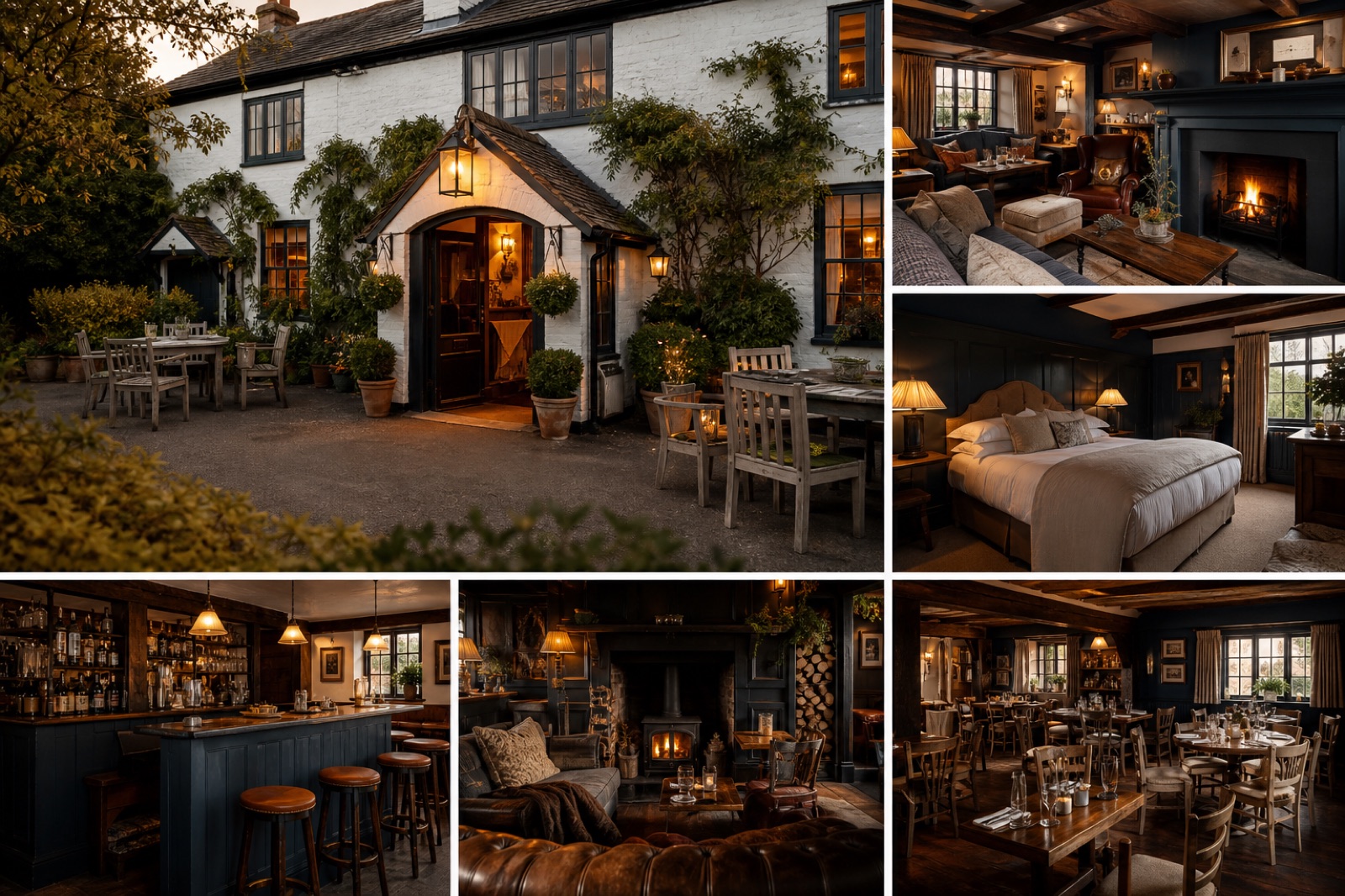
Pub with rooms and coaching inn finance
We arrange commercial finance for operators, buyers and investors acquiring or refinancing pubs with rooms and coaching inns. This is business lending against a trading hospitality business, not a personal mortgage.
Funding pub with rooms
Pubs with rooms and coaching inns blend two trades under one roof: a food and beverage business, often the larger share of turnover, alongside letting rooms that add a higher-margin accommodation income. The mix is the point. A strong kitchen and bar draw the trade, and the rooms convert that footfall into overnight revenue, which together make a more rounded business than a wet-led pub alone.
When we say pub with rooms finance we mean the commercial mortgage, term loan or refinance used to buy or refinance the inn as a trading business. Lenders read it through the blended trade, the split between food, beverage and room income, the freehold or leasehold tenure, and the operator behind it, sizing the loan on the going-concern earnings rather than personal income.
Because the income blends hospitality and accommodation, lenders weigh both sides: the resilience and seasonality of the food and beverage trade, and the room occupancy and rate. A well-run inn with a strong food reputation and steady room nights carries a rounded earnings story; one over-reliant on a single income stream or a thin trade record is read more cautiously.
We present the blended trade, the income split and the tenure so hospitality-experienced lenders can price the case, and we run the whole market as an arranger across commercial and specialist lenders.
What we fund
- Food-led pubs with letting rooms
- Traditional coaching inns with accommodation
- Country and destination dining inns with rooms
- Freehold and leasehold pubs with rooms
- Acquisition of an established trading inn
- Refinance of a pub with rooms onto better terms
Indicative terms
- Commercial mortgage LTVUp to around 65 to 70% of value
- Going-concern basisSized on the blended trade
- Term15 to 25 years
- Indicative rateFrom around 7 to 10% per annum
- Income mixFood, beverage and letting-room revenue
- TenureFreehold or leasehold
- Key testsBlended trade, income split, tenure, operator
Indicative only. Terms vary by lender, operator and home and are not an offer of finance.
How we fund pubs with rooms and coaching inns
We fund pubs with rooms on the blended going-concern trade. For an acquisition or refinance we model the maintainable earnings across the food, beverage and letting-room income, weigh the split between them, and arrange a commercial mortgage or term loan to around 65 to 70% of value over 15 to 25 years at an indicative 7 to 10% per annum. Lenders read both sides of the trade: a strong food reputation and steady room nights make a rounded earnings story, while over-reliance on one stream or seasonality in the dining trade is underwritten more carefully. The freehold or leasehold tenure matters, with freehold giving the lender bricks-and-mortar security alongside the trade. The operator's track record is central, because an inn is a hands-on business. Every figure is indicative and never an offer; the terms depend on the blended trade, the income split and the tenure.
Lender appetite for pubs with rooms and coaching inns
Pubs with rooms and coaching inns draw appetite from commercial and specialist hospitality lenders comfortable with blended food, beverage and accommodation trade. Challenger banks and specialist lenders fund acquisitions and refinance on the going-concern earnings, valuing a strong food reputation and steady room income, while high-street lenders back well-established, profitable inns with a sound trade record. Lenders weigh the income split, the seasonality of the dining trade, the tenure and the operator's track record when sizing a loan, typically to around 65 to 70% of value. As an arranger and introducer with no exclusive tie, we match the inn to the lender most comfortable with its blend of trades, rather than steering every case to one name, and we run the market for the keenest terms.
The pub with rooms and coaching inn market
Pubs with rooms sit at the crossover of the hospitality and accommodation markets, and the room side benefits from a liquid wider hotel market. Knight Frank and HotStats put regional UK RevPAR at around £98 in Q3 2025 on occupancy of 82.8%, the room demand a well-run inn captures alongside its food and beverage trade. UK hotel investment reached £3.01bn year to date in 2025 per Savills, after a record £6.6bn in 2024 per Christie & Co, with regional price per room at around £129,000 per Knight Frank, context for the room element of an inn's value. For a buyer, a pub with rooms is acquired as a going concern, so the blended trade, the food reputation and the operator drive value, which a lender factors into both the loan and the exit. We present that picture so the case is funded on the right basis.
Finance that suits this setting
- Hotel acquisition financeThe core route for buying a trading pub with rooms or coaching inn.
- Hotel refinanceRe-prices debt or releases equity once an inn trades steadily.
- Hotel term loansLong-term debt against the blended going-concern trade of an inn.
- Hotel refurbishment financeFunds kitchen, bar and room upgrades that lift the blended trade.
Fund a pub with rooms home
A view on fundability within one working day.
What drives a pub with rooms' numbers
A pub with rooms or coaching inn blends two trades, so its economics turn on the split between food and beverage, often the larger share of turnover, and the higher-margin letting-room income. Knight Frank and HotStats put regional UK RevPAR at around £98 in Q3 2025 on occupancy of 82.8%, the room demand an inn captures alongside its dining trade. The decisive factors for a lender are the maintainable earnings across the blended trade, the income split between the two sides, the seasonality of the food and beverage business, the freehold or leasehold tenure, and the operator's track record. A strong food reputation paired with steady room nights makes a rounded earnings story; over-reliance on a single stream is read more cautiously. We model the maintainable EBITDARM across both sides of the trade, because that blend is what supports the debt.
Indicative pub with rooms leverage and rates
Indicatively we arrange pub with rooms commercial mortgages to around 65 to 70% of value, over 15 to 25 years, at around 7 to 10% per annum, sized on the blended going-concern trade. A strong food reputation, steady room income, freehold tenure and a proven operator earn the keener end; over-reliance on one income stream, pronounced seasonality or leasehold tenure pull terms back. Refurbishment finance can fund kitchen, bar and room works that lift the blended trade. These are market-typical, indicative figures and never an offer; because the income blends hospitality and accommodation, the terms depend on the income split, the seasonality, the tenure and the operator, and we run the commercial and specialist market to find the keenest fit.
Frequently asked questions
Can I get a mortgage for a pub with rooms?
Yes. A pub with rooms or coaching inn run as a business is funded with a commercial mortgage or term loan on its blended going-concern trade, typically to around 65 to 70% of value over 15 to 25 years at an indicative 7 to 10% per annum. We size it on the combined food, beverage and room income, not personal income, and present every figure as indicative, not an offer.
How do lenders value a coaching inn?
On its blended going-concern trade. Lenders model the maintainable earnings across the food, beverage and letting-room income, weigh the split between them and the seasonality of the dining side, and read the freehold or leasehold tenure and the operator's track record. A strong food reputation and steady room nights make a rounded earnings story that supports keener terms.
Does the food trade or the room trade drive the finance?
Both. The food and beverage business is often the larger share of turnover, while the letting rooms add a higher-margin accommodation income. Lenders weigh both sides, because a well-run inn blends a strong kitchen and bar with steady room occupancy, and over-reliance on a single stream is read more cautiously.
How much deposit do I need for a pub with rooms?
As a working assumption, lenders advance to around 65 to 70% of value on the blended trade, so plan for a deposit of 30 to 35% plus working capital. The exact figure depends on the income split, the tenure, the trade record and the operator. We size each case individually and present the leverage as indicative.
Can I refinance a pub with rooms onto better terms?
Yes. Once an inn trades steadily, we refinance to re-price the debt or release equity for reinvestment or refurbishment, sized on the blended going-concern earnings. The terms depend on the proven trade, the income split and the operator, and we run the market to keep them as keen as the trade allows.
Funding a pub with rooms home?
Tell us about the home and the operator and we will come back with a view on fundability and likely terms.